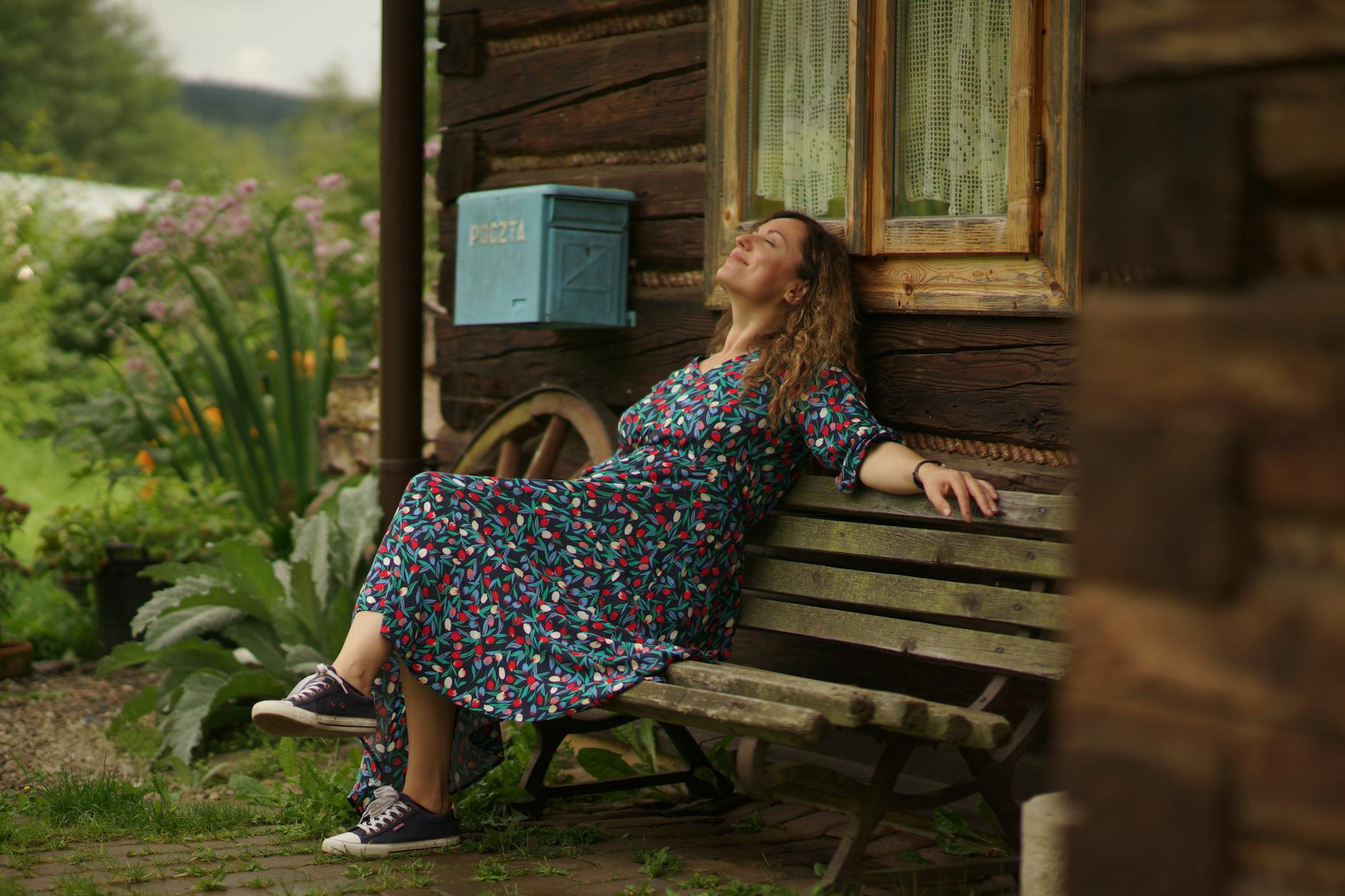
There’s a certain hour in the yard when the furniture finally stops being furniture and starts being a room—worn edges become character, a mismatched chair reads like intention, and a blanket tossed over a bench looks like an invitation. Backyard noir isn’t about new things; it’s about placed things—objects arranged so the space seems to have always been waiting for you.

Start with anchor pieces that ask for little: a low, weathered bench or a reclaimed pallet sofa makes a room without trying to be polite about it. Look for pieces with lived-in surfaces—peeling paint, soft patina, a single mismatched leg—because those flaws carry mood in sunlight and shadow. Position that anchor parallel to the sightline (toward a favored view, a lantern cluster, or the garden bed) so people naturally orient and gather.
Layer texture like a conversation. A coarse wool throw, a couple of woven floor cushions, and an oilcloth-topped table turn utility into warmth. Keep colors restrained—charcoal, olive, deep rust, and cream—and let fabric texture be the accent: frayed edges, visible stitching, and natural fibers read as intentional rather than curated. Small patterns are fine, but avoid loud prints that pull attention away from the overall hush.
Lighting is the emotional backbone. Mix sources: one low lantern (metal or smoked glass) for amber, a string of warm LED bulbs along the fence for soft ambient wash, and a single directional lamp near a reading spot for function. Keep bulbs warm (2700K–3000K) and use dimmers or lower-lumen bulbs so the glow hugs the furniture instead of blasting it. When possible, hide wiring in planters or behind posts; visible cords break the spell.

Functional accessories do double duty as design. A shallow tray on the coffee table collects mugs and keys while anchoring a vignette of a candle and a stack of dog-eared books. A cast-iron plant stand can hold both a potted fern and a lantern, giving vertical interest without clutter. Choose pieces that age well—metal with a patina, teak that silvered gracefully, or industrial concrete that chips with dignity.
Small structural tweaks change how the space is used. Add a low platform under the main seating to define the “room” and keep cushions off damp grass; a row of low planters can act as an informal backrest and buffer from wind; a narrow side shelf attached to a fence becomes a place for glasses and impromptu snacks. These modest interventions read as permanent thoughtfulness rather than staging.
Declutter with intention. Keep surfaces partly open—leave room for a mug or a sketchbook—so the yard feels ready for use, not cataloged. Store extra blankets in a weatherproof chest that doubles as a bench; hang a small basket for sunglasses and flashlights near the entry. When every object has a home, the remaining pieces gain presence.

A finishing touch: let odd little things speak. A battered metal clock that no longer keeps time, a single mismatched candlestick, a stack of folded paper maps or old sewing patterns—these hints make the space feel collected over time instead of bought in a day. They’re the soft signatures of a backyard that remembers.
Leave a Reply